About me
I didn't choose music. It chose me — or more accurately, it was just always there. My dad had me at Nighttown, the legendary jazz club down the street from our house in Cleveland Heights, before I started kindergarten. While other families went to the beach on vacation, we went to Red Rocks to see Derek Trucks and Widespread Panic. We sat in the Village Vanguard in New York City and watched Brad Mehldau play incredible music. I absorbed all of it long before I could explain any of it — and that turned out to be the best musical education I ever received.
I started formal lessons at age five with a classical teacher, Ms. Moran. She was exacting and patient and I loved her. But by eight years old, I was trying to sneak Thelonious Monk into my recital pieces, and Blue Monk doesn't live on a written page. She knew it. I knew it. So I followed the sound somewhere new.
Jazz opened everything up. My next teacher let me loose, and I took to it immediately. In third grade, I was playing boogie woogie piano before chorus class — pounding out walking bass lines while thirty kids chased each other around the room. I remember being mortified. Now I think it might be the most honest musical moment I've ever had. Nobody told those kids to dance. The music just moved them.
By middle school, I was deep into my local community college's youth jazz program. Sophomore year of high school, I was leading the top ensemble — a serious band that played professional gigs around Cleveland under the direction of world-class trumpeter Dominic Farinacci. That program taught me something I carry into every session I play and every lesson I teach: you don't memorize music. You internalize it. I play a song the way you'd retell a story you know by heart. The structure is there, but every time it breathes a little differently.
Then senior year, I walked into a wall. I realized my ear wasn't where it needed to be. Ear training — hearing what another musician plays and answering it in real time, without a chart, without rehearsal — is the foundation of everything I believe about music. It's the difference between reciting and conversing. When you are talking to someone, it’s quite tough to have a good conversation if you don’t know what they are saying! So I stepped back from performing and put in the work. It was humbling, and it changed everything about how I play.
Around this same time, something else shifted. I'd grown up on the Dead and the Allman Brothers, and I decided that it was time to start playing Rock and roll. It was at this time that I started playing B3 organ. Rock music is incredible. It moves an audience in a way jazz might have done in the first half of the 20th century. Jazz music gave me the vocabulary. The rock and jam band world gave me the reason to use it.
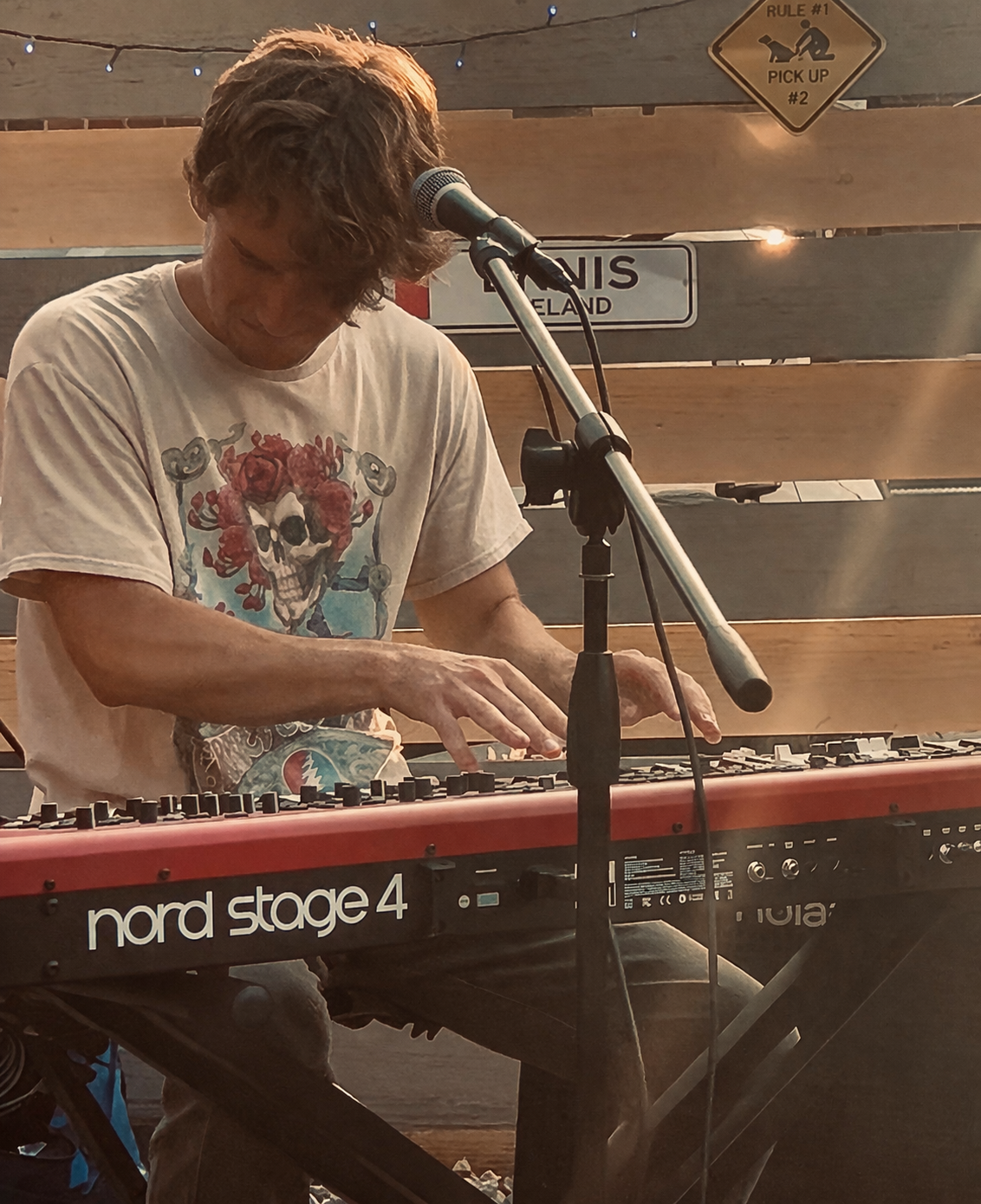
That road eventually led me to live in Arcata. This is a town built on live music. I'm the keys and organ player for the Bella Rayne Band, along with a variety of other projects. I also play solo gigs and private events around Humboldt County, do studio work, and teach young musicians how to speak music. I'm building a life here that feels like the one I was raised for. I invite you to join me on the next stage of my adventure.